What Not to Do With Tape In Extensions: 11 Mistakes That Can Ruin Your Results
Tape-in extensions have become one of the most popular ways to add length and volume—and for good reason.
And let’s be honest… tape-ins are THAT girl.
They’re lightweight, seamless, versatile, and blend beautifully when installed the right way. They offer a natural finish without putting as much tension on your hair as many other extension methods.
However, even the highest-quality extensions won’t last if they’re not cared for properly.
If you’re wondering what not to do with tape in extensions, you’re in the right place.
Over the years, we’ve learned a lot from both our own experience wearing tape-in extensions and the feedback we’ve received from customers. We noticed that many of the same problems—like slipping, tangling, or breakage—keep coming up. The good news is that most of them are completely preventable. Along the way, we’ve found simple solutions that really work, and we wanted to share them so more people can avoid the same mistakes and enjoy longer-lasting, better-looking tape-in extensions.
To make this guide easier to follow, we’ve organized the most common mistakes into three stages: before installation, during installation, and after installation. Feel free to jump to the section that matches where you are in your tape-in journey.
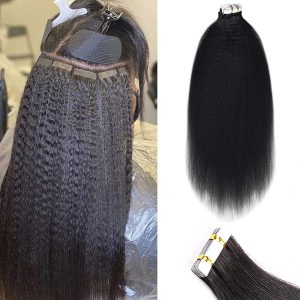
What Not to Do Before Getting Tape-In Extensions
Don’t Arrive With Heavy Conditioners or Oils in Your Hair
Surprisingly, one mistake happens before your tape-in extensions are even installed.
While it’s a good idea to wash your hair before your appointment, avoid using heavy conditioners, deep-conditioning masks, oils, or leave-in products. These can leave residue on your hair, making it harder for the medical-grade adhesive to bond properly. As a result, your tape-ins may start slipping much sooner than expected.
What Not to Do During Tape-In Extension Installation
Don’t Apply Tape-In Extensions Directly Against the Scalp
One of the biggest mistakes happens before you even leave the salon.
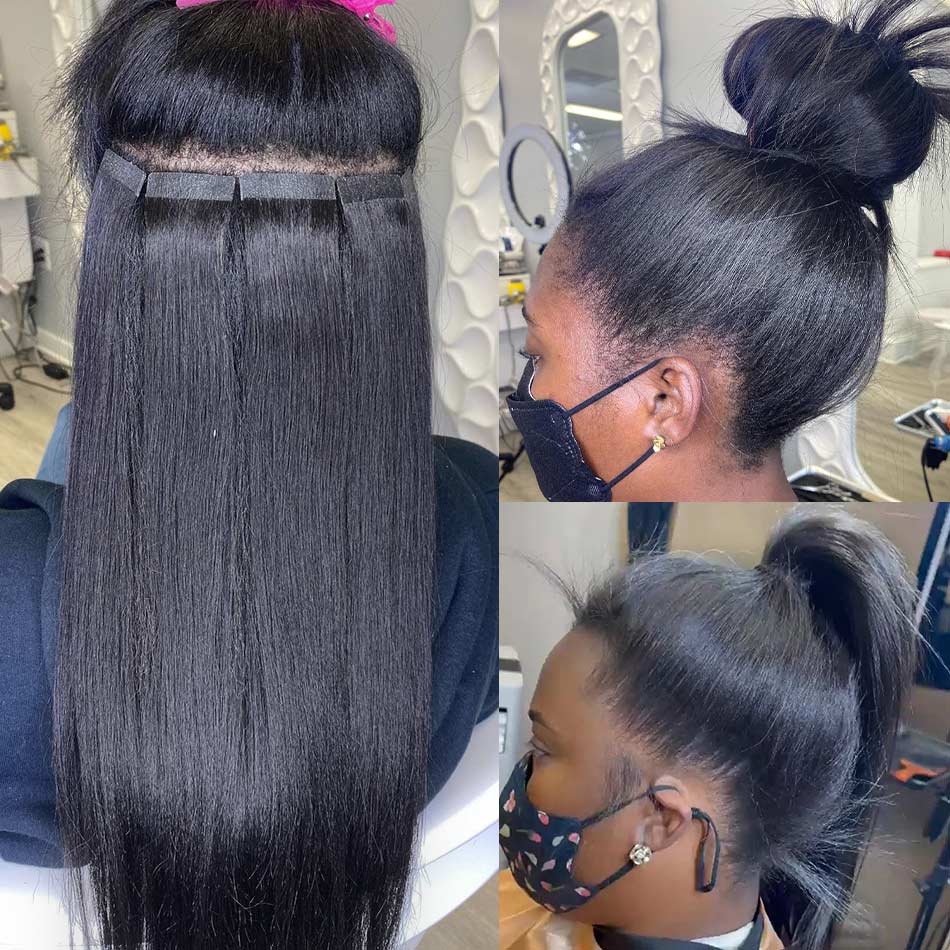
Tape-in extensions should never be applied directly against the scalp.
When the tape tabs sit too close to the scalp, they don’t have enough room to move naturally with your hair. This creates constant tension on the roots, making your extensions feel uncomfortable and increasing the risk of breakage over time.
A properly installed tape-in extension should be placed about half an inch away from the scalp. This small gap allows your natural hair to move freely, makes brushing easier, and helps reduce unnecessary stress on your roots.
What Not to Do After Getting Tape-In Extensions
1.Don’t Wash Your Hair Within the First 24–48 Hours
This is probably the most important rule after getting tape-in extensions.
The adhesive needs about 24 to 48 hours to fully cure and create a strong bond.
If you wash your hair too soon, water and shampoo can interfere with the adhesive before it has completely set. As a result, the tape may become gummy, weaken, or start slipping.
Instead, leave your hair alone during those first couple of days and let the adhesive fully bond.
Pro tip: If you live somewhere hot or humid, waiting closer to 48 hours is often the safer choice.
2.Don’t Tie Your Hair Up Too Tightly Right After Installation
It can be tempting to throw your hair into a sleek ponytail or tight bun immediately.
However, your extensions are still settling into place.
During the first few days, tight hairstyles can:
- Pull on the adhesive
- Shift the tape placement
- Create unnecessary tension
- Increase the chance of slipping
Instead, wear your hair down, in a loose ponytail, or in a relaxed low bun until the adhesive has fully set.
Even after the first few days, wearing very tight hairstyles every day isn’t ideal. Constant tension can stress your natural hair and, over time, may contribute to thinning around the attachment points.
A better option is to rotate your hairstyles and use soft silk scrunchies whenever possible.
3.Don’t Pull Too Hard When Brushing
Tape-in extensions should be brushed gently.
Pulling aggressively at the roots puts stress on both the adhesive and your natural hair.
Instead:
- Hold the hair near the roots while brushing.
- Start from the ends and work upward.
- Use a brush designed for extensions.
A few extra seconds of gentle brushing can prevent unnecessary slipping and breakage.
4.Don’t Use Oils or Heavy Products Near the Tape Bonds
This is one of the biggest reasons tape-ins start falling out early.
While oils and serums are great for dry ends, they don’t belong near the adhesive.
Instead, apply moisturizing products only from the mid-lengths to the ends.
5.Don’t Leave Your Roots Damp
Many people think air-drying is the healthiest option.
For tape-in extensions, that’s not always true.
When moisture stays trapped around the tape tabs, it can weaken the adhesive and encourage tangling or matting near the roots.
A simple habit makes a big difference:
- Dry the roots thoroughly within about 30 minutes after washing.
- If you prefer to air-dry, only let the lengths air-dry after the roots are completely dry.
This helps keep both your extensions and your natural hair in better condition.
6.Don’t Overheat the Tape Bonds
Heat styling is generally safe for tape-in extensions—but direct, excessive heat isn’t.
The heat itself isn’t usually the problem.
The real issue happens when very hot tools are used directly over the adhesive, especially if oils or styling products are already around the tapes.
Avoid:
- Holding a blow dryer on the tape tabs for too long
- Pressing flat irons directly over the adhesive
- Using extremely high temperatures around the roots
Instead, focus the heat on the hair rather than the tape tabs.
7.Don’t Leave Your Extensions in Too Long
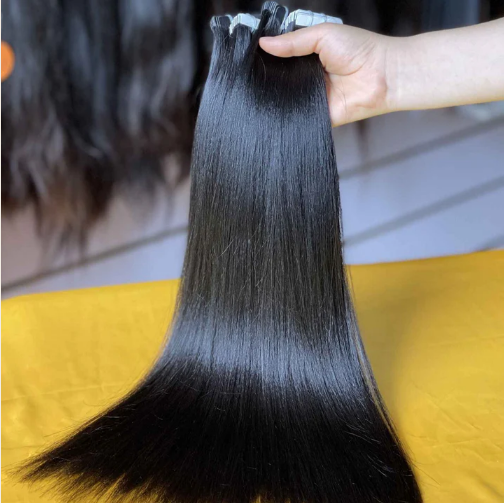
Tape-in extensions aren’t designed to stay in forever.
As your natural hair grows, the tape tabs move farther away from the scalp.
Waiting too long before a maintenance appointment can lead to:
- Tangling
- Matting
- Extra pulling on your roots
- More difficult removal
Most stylists recommend moving the extensions up every 6 to 8 weeks.
Regular maintenance protects both your extensions and your natural hair.
8.Don’t Remove Tape-In Extensions Yourself
It might seem easy to peel the tapes off.
Please don’t.
Medical-grade adhesive requires a professional remover solution to dissolve the bond safely.
Trying to pull them out yourself can result in:
- Hair breakage
- Pain
- Adhesive residue
- Damaged natural hair
Professional removal takes only a short time and greatly reduces the risk of damage.
If the maintenance and removal process of tape-in extensions feels like more than you want to handle, you may also want to compare them with other extension methods. Our guide on clip-in vs tape-in hair extensions breaks down the differences to help you find the option that best fits your lifestyle.
9.Don’t Go Swimming Without Protecting Your Extensions
Pool water and ocean water aren’t great friends with tape-in extensions.
Chlorine and salt water can weaken the adhesive and dry out the hair.
If you plan to swim:
- Wear your hair in a loose braid.
- Rinse it with fresh water afterward.
Whenever possible, avoid frequent swimming while wearing tape-ins.
If you’re curious about what it’s really like to wear tape-in extensions long term, you may also enjoy reading our 6-week tape-in extension experience, where one of our customers shares the honest pros, cons, and lessons learned from wearing them for six months.
Final Thoughts
Knowing what not to do with tape in extensions is just as important as knowing how to care for them.
Fortunately, most problems—whether it’s slipping, tangling, or breakage—are completely preventable with the right habits. By avoiding these common mistakes, you’ll help your tape-ins last longer, blend better, and stay comfortable throughout every wear.
Hopefully, this guide has answered your questions and made caring for your tape-in extensions much easier, so you can enjoy beautiful, natural-looking hair with confidence.