Is a ceramic or titanium flat iron better?
Ceramic or titanium—which flat iron should you choose?
The answer depends on more than just the type of plate. Your hair type matters too.
Let’s break down the differences and help you find the right one for your hair.
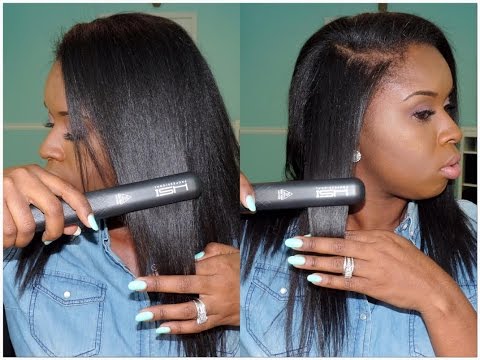
Ceramic vs Titanium Flat Iron: What’s the Difference?
Before you decide which flat iron to buy, it helps to understand what makes ceramic and titanium different.
Both can straighten your hair and create a smooth, polished look. However, they handle heat differently. That difference can affect how quickly you style your hair, how many passes you need, and how much control you have during styling.
Ceramic Flat Irons
Ceramic flat irons are known for distributing heat more evenly across the plates.
Why does that matter? When the heat stays more consistent, you can reduce the chance of exposing one small section of hair to much more heat than another.
Ceramic also tends to offer a more controlled styling experience. That makes it a popular choice for people who don’t want to jump straight to extremely high temperatures.
Another advantage is that ceramic flat irons are widely available at different price points. So, if you’re buying your first flat iron, you can usually find a ceramic option without spending a fortune.
However, ceramic has a trade-off.
If you have very thick or resistant hair, a ceramic flat iron may take longer to straighten your hair. You may also need more passes to get the finish you want.
And remember, ceramic doesn’t mean “no damage.” Using too much heat or repeatedly going over the same section can still lead to dryness and heat damage.
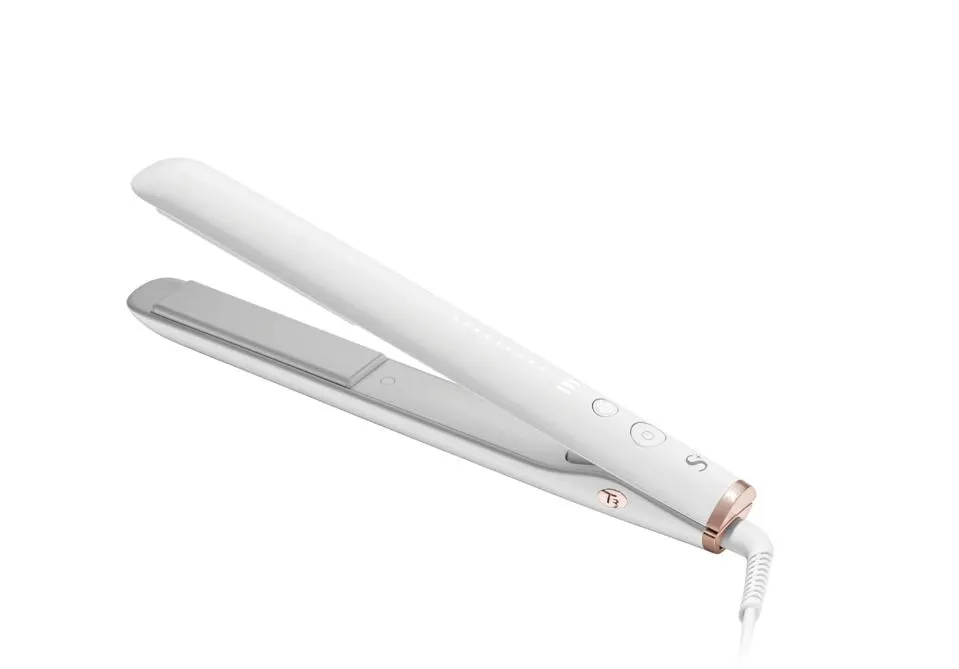
Ceramic-Coated Flat Irons: Are They the Same?
Not exactly.
When a flat iron says “ceramic-coated,” it usually means that a metal plate has a ceramic coating on the surface. A pure ceramic flat iron, on the other hand, uses ceramic as the main plate material.
Ceramic-coated flat irons can be a more affordable option, and they can still provide a smooth styling surface when the coating is in good condition.
However, the coating can wear down over time.
If you notice chips, peeling, rough areas, or the plates no longer glide smoothly through your hair, it’s worth replacing the tool. A damaged plate can create more friction and uneven styling.
So, when you’re shopping, don’t assume that “ceramic” and “ceramic-coated” mean exactly the same thing.
Titanium Flat Irons
Titanium flat irons are known for heating up quickly and transferring heat efficiently.
That can be a big advantage when you’re working with hair that takes a long time to straighten.
Titanium plates also maintain heat well during styling. Instead of waiting for the plates to heat back up between sections, you can usually keep moving through your hair at a steady pace.
As a result, titanium can help you straighten resistant hair more efficiently and may reduce the number of passes you need.
Sounds perfect, right?
Not necessarily.
The same efficient heat transfer that makes titanium powerful can also make it less forgiving if you use too much heat. Fine, fragile, or already damaged hair may not need that level of heat.
That’s why titanium isn’t simply “better” because it heats faster.
Think of it this way: titanium gives you more power, but you need to know how to control that power.
Still not sure which flat iron to choose? Byrdie’s The 12 Best Hair Straighteners is worth a look for more tested options.
Whichever flat iron you choose, heat protection still matters. If you use heat regularly, a heat protectant can help reduce the impact of heat on your strands. Learn more in our guide, Does Heat Protectant Really Protect Hair?
Which Flat Iron Is Better for Your Hair Type?
Now that you know how ceramic and titanium work, it’s time for the question that matters most:
Which one is right for your hair?
There isn’t one answer for everyone. Your strand thickness, hair condition, and how easily your hair straightens all matter.
Fine or Thin Hair: Start With Ceramic
If your strands are fine or thin, you usually don’t need extremely high heat to straighten them.
For that reason, ceramic is often a good starting point.
The more controlled heat can help you style your hair without automatically reaching for the highest temperature setting.
However, don’t confuse thin hair with low hair density.
You can have a full head of hair with many strands while each individual strand remains fine. In that case, you may have a lot of hair to work through, but that doesn’t mean your strands can handle unlimited heat.
Start with a lower temperature and see how your hair responds.
Medium or Healthy Hair: You Have More Options
If your hair is relatively healthy and has a medium strand thickness, you have more flexibility.
Both ceramic and titanium can work well.
So, how do you choose?
Think about your styling habits.
If you straighten your hair occasionally and prefer a more controlled experience, ceramic may be all you need.
On the other hand, if your hair takes a long time to straighten and you want to speed things up, titanium may be worth considering.
In this case, your personal preference can matter just as much as your hair type.
Thick or Coarse Hair: Titanium May Save Time
If your hair is thick, coarse, or resistant to straightening, titanium may be the more efficient option.
Because titanium transfers heat quickly and maintains it well, it can help you work through resistant sections without spending quite as much time on each one.
That can be especially useful if a ceramic flat iron leaves you making several passes over the same section.
However, don’t make the mistake of thinking:
“My hair is thick, so I need the highest temperature.”
That’s not necessarily true.
Your hair may be dense without having extremely thick individual strands. So, pay attention to your strand thickness and how your hair reacts to heat.
The goal isn’t to use as much heat as possible.
The goal is to get the result you want with as little heat as reasonably possible.
Curly or Coily Natural Hair: Look Beyond Curl Pattern
If you have curly or coily natural hair, choosing a flat iron can be a little more complicated.
Your curl pattern alone doesn’t tell you which plate material you need.
For example, someone with thick, healthy, resistant strands may appreciate the speed of titanium.
But someone with fine, color-treated curls may prefer the more controlled experience of ceramic.
So, don’t choose a flat iron simply because you have a certain curl pattern. Look at the condition and behavior of your actual hair.
Damaged or Color-Treated Hair: Be More Careful With Heat
If your hair already feels dry, weak, or damaged, the question isn’t simply whether ceramic or titanium is better.
The bigger question is: does your hair need more heat at all?
Ceramic is generally a better starting point for fragile hair because it gives you more control. Still, switching to ceramic won’t protect your hair from every type of heat damage.
Your technique matters too.
Use the lowest temperature that gives you the result you want, avoid repeated passes, and always use a heat protectant.
If you’re already dealing with heat damage, you may also want to read our guide on How to Restore Heat Damaged Natural Hair before adding more heat to your routine.
What If You Want Straight Hair Without All the Heat?
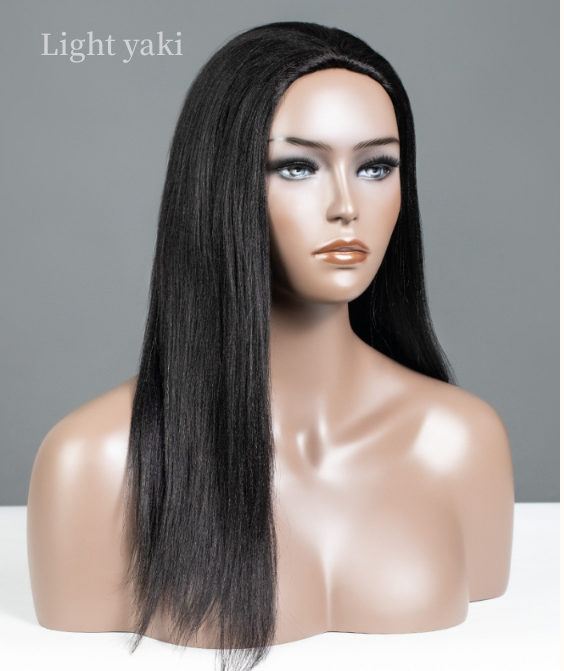
Yaki straight wigs have become a popular choice for exactly this reason. The texture gives you a look that’s similar to a fresh silk press, but you don’t have to put your entire head through the straightening process.
Whether you choose a Yaki straight half wig or a Yaki straight U-part wig, you only need to leave out a small amount of your natural hair and blend it with the wig. And because both styles can be glueless, there’s no need to deal with glue or a complicated installation.
Final Thoughts
If you’re trying a flat iron for the first time, start small. Use the lowest amount of heat and the fewest passes you need to get the look you want, then see how your hair responds.
There’s no need to push your hair to its limit on the first try. Once heat damage happens, recovery can take time. So pay attention to how your hair feels and how your curls respond after styling.
If your hair is in good condition and responds well to heat, you can feel more confident enjoying a sleek silk press. Just remember that healthy hair still needs protection and proper heat habits.