How to restore heat damaged natural hair?
If you’re dealing with heat-damaged natural hair, you probably want to fix it as quickly as possible. I get it. Seeing your curls lose their shape or your hair feel dry and fragile can be frustrating, especially when you’re not sure how much damage you’re dealing with.
So, let’s first look at the signs of heat damage and what your recovery timeline may look like. Then, you can use the tips below to see what may be missing from your current routine.
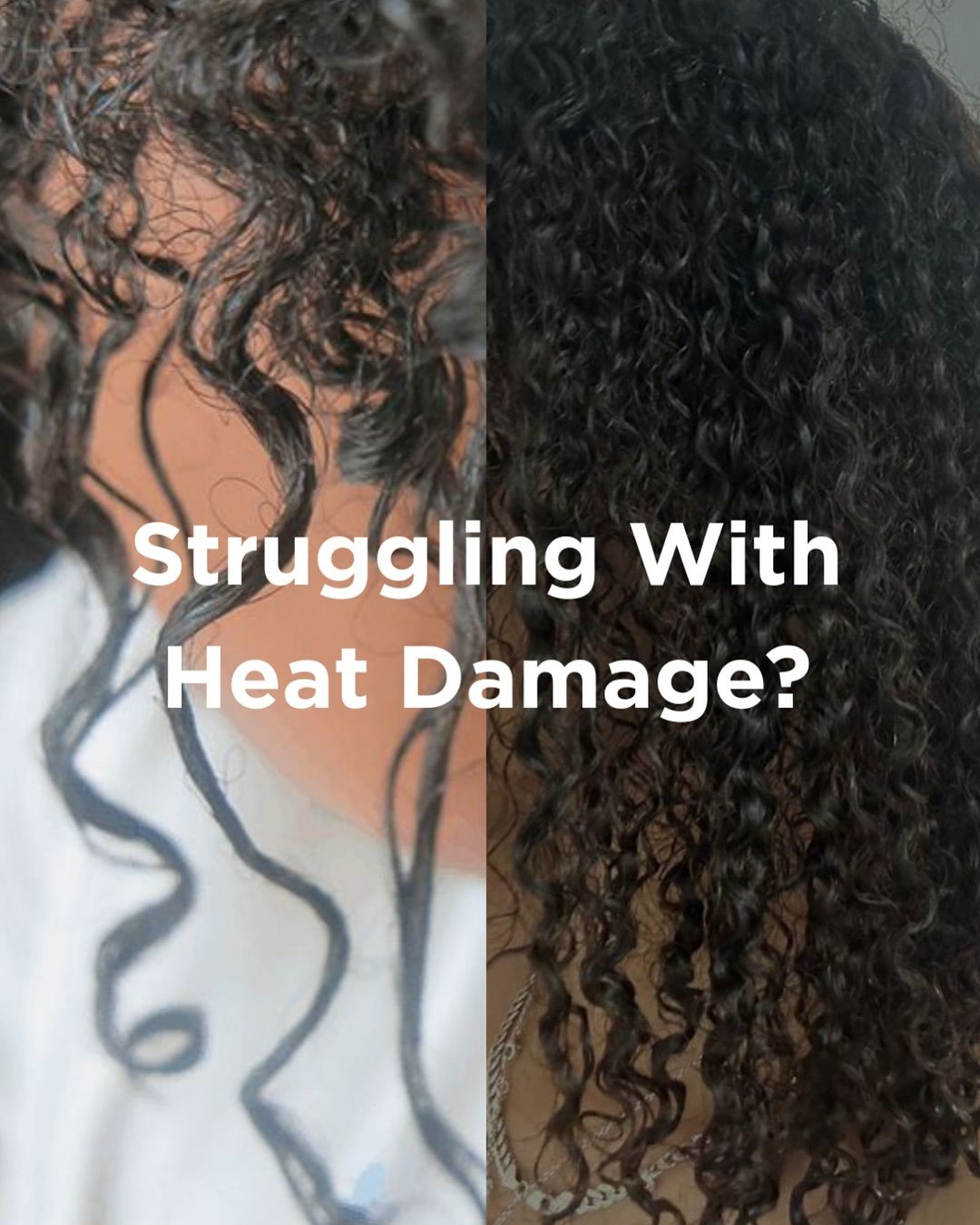
What Does Heat Damage Look Like on Natural Hair?
Mild Heat Damage: Your Curls Are Still Mostly Intact
Mild heat damage may show up as a few curls that don’t bounce back as well as they used to. Your hair may also feel slightly drier or less flexible.
The good news? Your natural curl pattern may still be largely intact.
With a consistent routine that focuses on moisture, gentle handling, and a break from heat, you may notice your hair feeling better within a few weeks.
Moderate Heat Damage: Some Sections Stay Straight
With moderate damage, you may notice more obvious changes. Some sections may stay straight after washing, while other areas still show your original curl pattern.
Your hair may also feel rougher, tangle more easily, or break more than usual.
At this stage, recovery can take several months. You can improve the look and feel of the damaged hair, but some sections may not return completely to their original texture.
Severe Heat Damage: Persistent Straight Ends and Breakage
Severe heat damage is usually easier to recognize. Large sections may remain straight, limp, or unresponsive even after washing. Your hair may also feel brittle, and the ends may split or break easily.
Unfortunately, severely damaged hair cannot completely repair itself. Hair is not living tissue, so once the internal structure suffers significant damage, products cannot turn it back into completely healthy hair.
At this point, your goal is to protect the healthier hair you still have and gradually remove the most damaged sections.
If the damaged ends continue to break or refuse to improve after consistent care, a trim may be the best option. Some people may even consider a big chop to remove the damaged length at once.
1.Deep Condition Your Hair Regularly
Heat-damaged natural hair usually needs plenty of moisture. That makes deep conditioning one of the easiest steps to add to your weekly routine.
A good deep conditioner can improve softness, manageability, and flexibility. It can also make your hair easier to detangle, which helps reduce unnecessary breakage.
Try deep conditioning once a week. If your hair feels particularly dry, you may need to adjust the frequency based on how your strands respond.
You don’t need an expensive product, either. Look for formulas designed for dry or damaged hair. Ingredients such as shea butter, aloe, and nourishing oils can work well for many natural hair types.
Most importantly, pay attention to how your hair feels after treatment. Your hair should feel softer and easier to manage, not coated or weighed down.
2.Try a Warm Oil Treatment
Want to give your hair some extra TLC? A warm oil treatment can be another useful addition.
Warm oil can help coat the hair and improve softness and manageability. Just remember that warm should never mean hot. You don’t want to add more heat stress while caring for heat-damaged strands.
Apply the oil according to the product directions, cover your hair with a shower cap, and then wash and condition as usual.
As with any treatment, consistency matters more than doing an intensive treatment once in a while.
3.Consider Protein or Bond-Building Treatments
Moisture is important, but damaged hair may also benefit from treatments that focus on strength.
Protein treatments can temporarily reinforce weakened areas and make hair feel stronger. Bond-building products, such as Olaplex, K18, or Curlsmith Bond Curl, are designed to support damaged bonds within the hair fiber and improve strength and resilience.
However, more treatment doesn’t always mean better results.
Too much protein can leave some hair feeling stiff or brittle. So pay attention to how your hair responds rather than automatically adding another treatment to your routine.
If your hair feels dry, focus on moisture. If it feels weak and breaks easily, a strengthening treatment may be worth considering.
4.Protect Your Hair From Daily Manipulation
While your hair is recovering, you don’t need to style it every morning.
Low-manipulation and protective styles can reduce daily brushing, combing, and restyling. Loose twists, braids, low-tension cornrows, buns, and wigs can all give your hair a break.
A human hair glueless wig can also be a convenient option. Since you don’t need glue for installation, you can remove it more easily and avoid repeatedly manipulating your natural hair.
However, remember that a protective style only helps when you wear it carefully. Tight braids, heavy extensions, and excessive tension can create another source of stress.
Keep your styles comfortable, avoid pulling around your edges, and give your hair regular breaks.

5.Be Gentle on Wash Day
Your wash day routine matters, too.
Heat-damaged hair can be fragile, so avoid aggressive detangling. Work in sections, start at the ends, and slowly move toward the roots as the tangles loosen.
Your fingers or a wide-tooth comb can help you work through knots with less pulling.
After washing, don’t rough up your hair with a regular towel. Instead, gently squeeze out excess water with a soft T-shirt or microfiber towel.
These small changes may not feel dramatic, but they can help reduce unnecessary breakage over time.
6.Keep Your Hair Moisturized Between Wash Days
Your hair care routine shouldn’t stop after wash day.
If your strands feel dry between washes, refresh them with a water-based leave-in conditioner or moisturizing spray. You can then use a small amount of oil or hair butter if your hair responds well to it.
Curl creams can also help define and protect your natural texture.
Start with a small amount and see how your hair responds.
Know When It’s Time for a Trim
Sometimes, the best thing you can do for severely damaged hair is let go of the ends that won’t recover.
If your ends remain straight, split, rough, or extremely fragile despite consistent care, trimming may be your best option.
You don’t necessarily have to cut everything at once. You can gradually trim damaged sections as your healthy hair grows.
However, some people prefer to remove most or all of the damaged length in one go. That’s where a big chop comes in.
If you’re considering this option, our guide to the pros and cons of a big chop can help you decide whether it makes sense for your hair goals and lifestyle.
Think of trimming as a reset, not a failure. The goal is to protect your healthier hair and make room for new growth.
Final Thoughts
Restoring heat-damaged natural hair takes patience. Some curls may bounce back, while severely damaged sections may never return to their original pattern.
The key is to focus on what you can control: less heat, more moisture, gentle handling, reduced manipulation, and consistent care.
Most importantly, don’t judge your progress after one wash day. Give your routine time to work, pay attention to how your hair responds, and trim damaged ends when they’re no longer serving you.
With a little patience and plenty of TLC, you can give your natural hair the best chance to look and feel healthier again.