How to Test Human Hair: 5 Simple Ways to Check
Have you ever bought a human hair wig or extensions from a new vendor and wondered if you really got 100% human hair?
There are actually two situations where you may want to know how to test human hair.
First, you may have just received a new wig or set of extensions. Before you install, color, or heavily style them, you want to make sure the hair is what the seller promised.
Second, everything may seem fine at first. But after you start using the hair, you notice severe tangling, stiffness, or other changes that make you question whether it is really human hair.
In both situations, testing the hair can help you catch a problem early. More importantly, if the hair turns out to contain synthetic fibers, your test results can give you useful evidence when you contact the seller about a refund, replacement, or other compensation.
Here are five simple ways to test human hair.
Stage 1: Test the Hair Before You Use It
If you have just received a wig or extensions from a vendor you have never purchased from before, don’t rush to install them.
Take a few minutes to check the hair first.
Two simple tests can give you an early idea of what you received.
1. Check the Hair’s Look and Feel
Start with the simplest test: look at the hair and touch it.
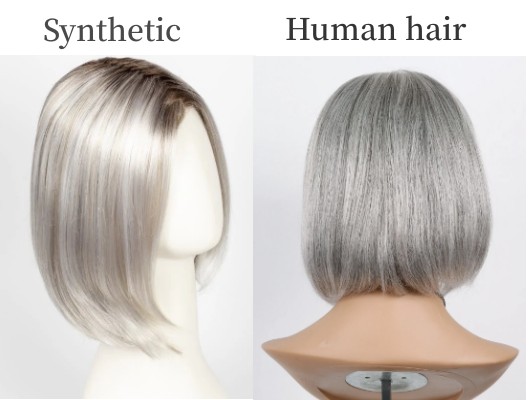
Genuine human hair usually has a natural-looking shine. It should move naturally rather than looking overly glossy or plastic-like.
Run your fingers through the hair and pay attention to how it feels.
Does it feel soft and flexible? Does it move naturally?
Synthetic fibers can sometimes have a very uniform appearance. They may also feel stiff, overly smooth, or slightly plastic-like.
2. Try the Water Test
Before you start wearing a new wig or using new extensions, you will probably want to wash the hair anyway. This is a good opportunity to pay closer attention to how the hair reacts to water.
Instead of doing anything special, simply wash the entire wig or set of extensions as you normally would. The key is to observe the hair during and after the wash.
As the hair gets wet, pay attention to how it feels and moves.
Human hair naturally absorbs moisture. When wet, it usually becomes darker and heavier, and its natural texture may become more noticeable. The hair should still feel flexible and move naturally.
However, keep in mind that water alone cannot prove that hair is 100% human hair. Some synthetic fibers can also look realistic when wet. Think of this as an early check rather than a final answer.
If the Hair Passes These Basic Checks
If the hair looks and feels natural before and after washing, and you don’t notice anything unusual, you can move on to wearing and styling it.
You don’t need to keep testing the wig just because you are worried about getting a bad product.
Use it normally, but pay attention to how it performs over time.
Stage 2: Test the Hair When Something Seems Wrong
Sometimes a wig looks completely normal when you first receive it.
The problem appears later.
Maybe the hair starts tangling badly. Maybe it becomes stiff and difficult to manage. Or perhaps you notice more shedding than expected when you try to detangle it.
If something changes dramatically during use, don’t immediately assume that you did something wrong.
First, look at the condition of the hair and consider testing a few loose strands.
The burn test is one of the most commonly mentioned ways to test human hair.
However, you don’t need to cut a piece from your wig just to perform this test.
If the hair has started tangling and you notice strands falling out while brushing or detangling, save a few of those loose strands.
Then you can use them for a burn test instead.
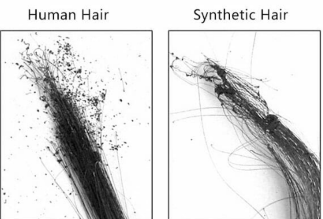
Genuine human hair is a natural protein fiber. When exposed to a flame, it generally burns and produces an odor similar to burning hair. It also leaves a light, powdery ash.
Synthetic fibers react differently.
Depending on the material, they may shrink, curl away from the flame, melt, or produce a plastic-like smell. They can also leave behind a hard, melted residue instead of turning into ash.
4. Try a Heat Test
Do you plan to curl or straighten your wig?
If so, you have another opportunity to observe how the hair reacts to heat.
You don’t need to use extreme temperatures. Start with a small section and a lower heat setting.
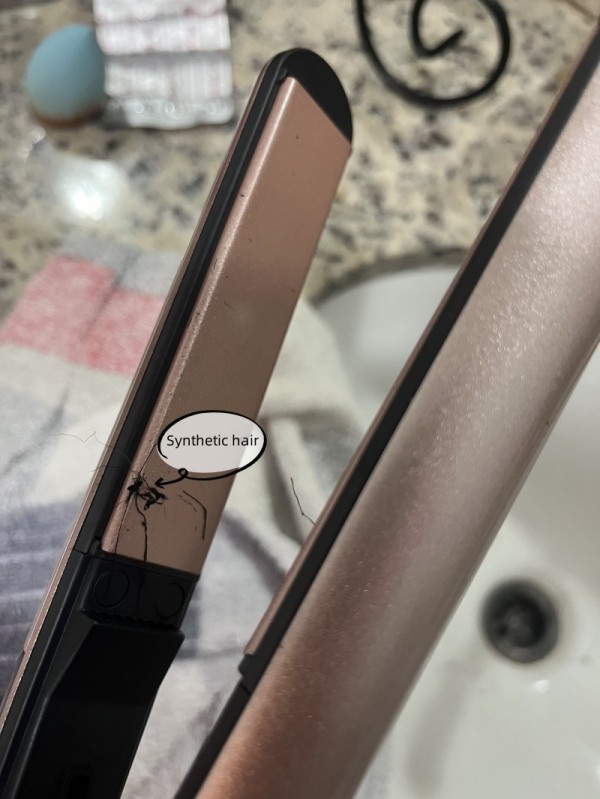
Human hair can generally be curled or straightened with appropriate heat and heat protection. It should respond to the styling tool rather than suddenly melting or shrinking.
Synthetic fibers can behave very differently.
High temperatures may cause some synthetic hair to melt, shrink, become stiff, or lose its original shape.
Once your hair passes these basic checks, it’s time to enjoy your wig.
If you notice tangling later, keep in mind that it doesn’t always mean there’s a problem with the hair itself. Everyday wear, friction, dryness, and improper care can all contribute to tangling. If you want to learn more, check out our guide on How to Stop Human Hair Wig From Tangling.
5. Try a Bleach Test
You may never need a bleach test.
But if you plan to color or bleach your wig or extensions, this test can become useful.
Human hair contains natural pigment, so it can generally be lightened with bleach. Synthetic fibers, on the other hand, usually cannot be bleached in the same way.
And I would never bleach an entire wig just to find out whether it is real—unless bleaching was already part of my styling plan.
If you discover that the hair is not 100% human hair, don’t simply accept the loss.
Keep your test results, photos, videos, purchase information, and messages with the seller. Then contact the seller and explain what you found.
Depending on the situation, you may be able to request a refund, replacement, or other compensation.
Contact the Seller Before You Throw the Hair Away
If you believe you received a synthetic blend instead of 100% human hair, give the seller a chance to respond.
Explain the problem clearly.
Instead of simply saying, “This hair is fake,” tell them what happened.
For example:
The hair became extremely tangled after normal use, and I tested several loose strands. The strands reacted differently from human hair during the test. I have photos and videos of the results.
Clear evidence makes your complaint much stronger.
Final Thoughts
Buying human hair wigs or extensions online can feel like a gamble. One of the biggest concerns is paying a high price for hair that does not match what you expected.
The funny thing is, online shopping sometimes turns us into “hair experts” overnight. Suddenly, we need to learn how human hair should look, feel, and behave.
With these simple testing methods, you can better understand what you received. And if the hair is not 100% human hair as promised, you will have the evidence to communicate with the seller clearly.
A little knowledge can help you save time, money, and unnecessary stress.