Why Do Cornrows Itch? 7 Common Reasons
Cornrows are one of the best protective styles for natural hair. They are low-maintenance, versatile, and can last for weeks when cared for properly. Whether you’re wearing them alone or using them as the foundation for a quick weave, sew-in, half wig, or the increasingly popular Miracle Knots, neat cornrows help every style look better and last longer.
But there’s one problem almost everyone experiences at some point:
Why do cornrows itch so much?
Many people assume an itchy scalp always means it’s dry. Surprisingly, that’s not always true.
In many cases, the itching starts because of your daily hair care routine, product buildup, tension, or a combination of several small factors.
The good news is that once you understand why your cornrows itch, you can usually fix the problem without taking your hairstyle down early.
If you’re not sure what’s causing the itching, don’t give up on your protective style. Instead, work through the possible causes one by one until you find the real reason.
Let’s get started.
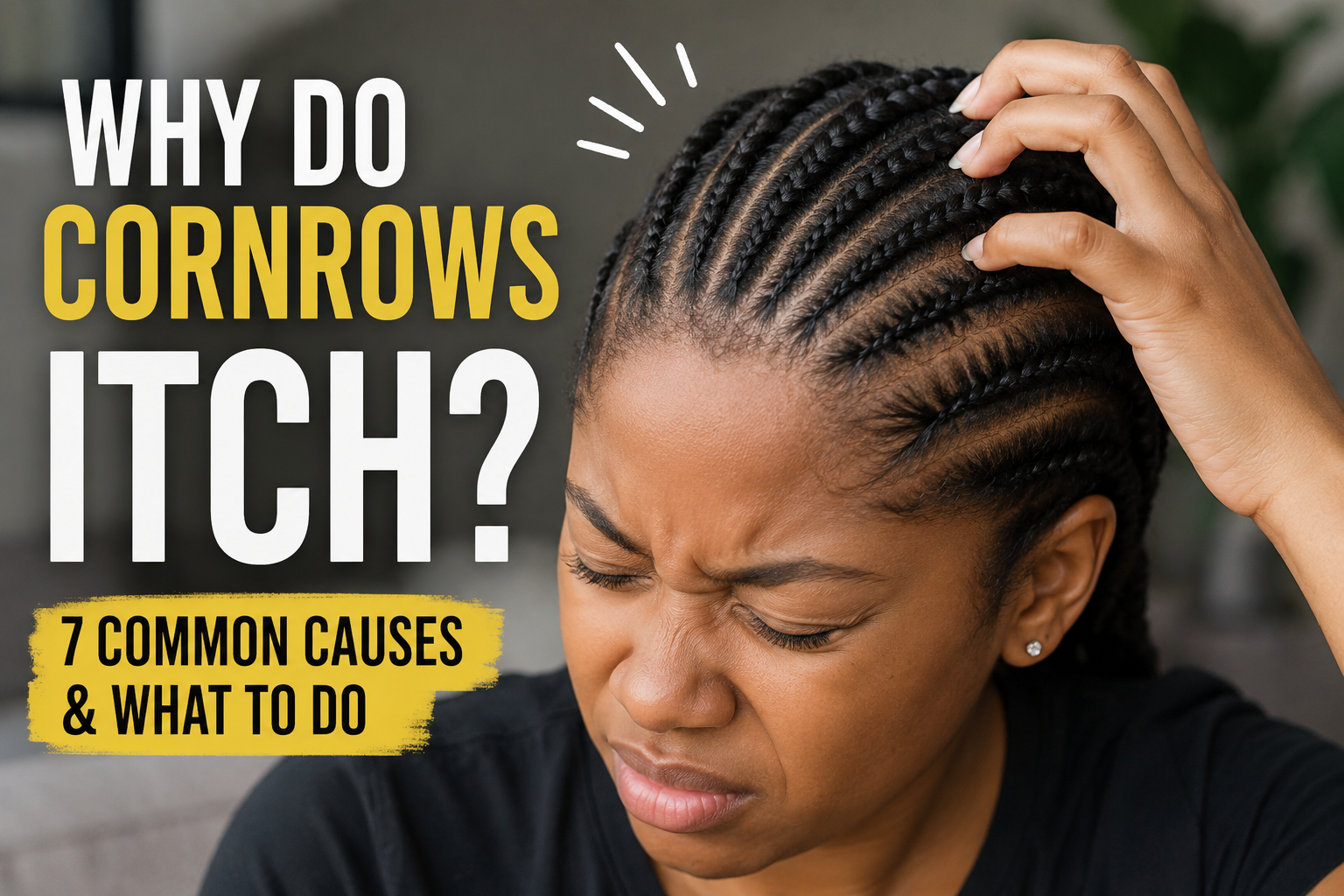
Why Do Cornrows Itch?
The most common reasons include:
- Product buildup on the scalp
- Too much oil
- A dry scalp
- Tight braiding
- Sweat and heat
- Dirt buildup
- Allergic reactions to products or hair
Sometimes, more than one cause is responsible.
That’s why identifying the real reason is much more effective than simply adding more oil.
1.Product Buildup Is Often the Real Cause
Many people believe an itchy scalp always needs more moisture.
Ironically, adding more products can actually make the problem worse.
Here’s why.
When your hair is braided into cornrows, it becomes almost impossible to apply leave-in conditioner or deep conditioner without some of it touching your scalp.
Those products are designed for your hair strands, not your scalp.
After moisturizing your cornrows, some conditioner stays directly on your skin.
Over the next several days, it mixes with:
- natural scalp oil
- sweat
- heat
- dust
- styling products
Eventually, the mixture begins to irritate your scalp.
Unlike box braids, cornrows sit flat against your head. There is very little space between your hair and your scalp.
As a result, products spread more easily and remain trapped closer to your skin.
Instead of feeling dry, your scalp may feel:
- sticky
- greasy
- heavy
- irritated
Sometimes the itch isn’t caused by dryness at all.
It’s simply too much product sitting on your scalp.
What to Do
Try using:
- lightweight leave-in products
- less product overall
- products applied mainly to your hair instead of directly onto your scalp
In many cases, less really is more.

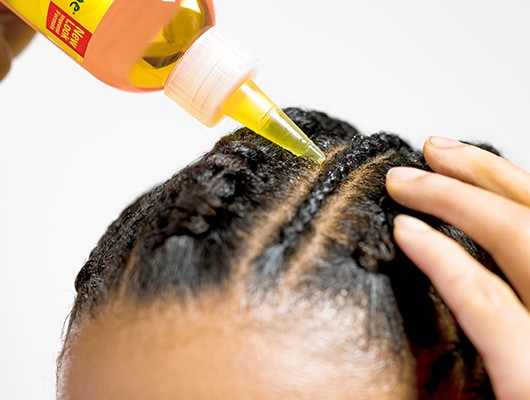
2.Too Much Oil Can Make Cornrows Itch
Oil isn’t always the solution.
Many people automatically reach for scalp oil whenever their cornrows start to itch. However, if product buildup is already present, adding more oil simply creates another layer.
Oil mixes with sweat, conditioner, and dirt, making the scalp feel heavier and increasing buildup over time.
So, how do you know if your scalp actually needs oil?
A dry scalp often feels tight, flaky, or looks visibly dry. If your scalp already feels greasy or shiny but still itches, adding more oil probably won’t help—and may even make the problem worse.
What to Do
Instead of oiling your scalp every day:
- Oil your scalp only when it feels dry or tight.
- Use a small amount rather than saturating the scalp.
- Choose a lightweight oil that absorbs easily.
- Keep your scalp clean to prevent buildup.
A healthy scalp should feel comfortable—not constantly oily.
3.Your Scalp May Actually Be Dry
Of course, dryness can still cause itching.
Weather changes, indoor heating, air conditioning, and naturally dry skin all reduce scalp moisture.
The difference is that a dry scalp usually feels:
- tight
- flaky
- rough
rather than sticky or greasy.
What to Do
Use a lightweight scalp mist or hydrating spray instead of heavy creams.
Hydrate your scalp regularly without saturating it with products.
4. Tight Cornrows Can Irritate Your Scalp
Fresh cornrows should feel secure.
They should not be painful.
If your scalp hurts, burns, or feels extremely tight during the first few days, your braids may have been installed with too much tension.
Unlike box braids, cornrows are braided flat against the scalp from the very beginning. Because each braid stays attached to your head along its entire length, the pulling sensation is often more noticeable—especially if it’s your first time wearing cornrows.
If you’re new to cornrows, this is an important detail to keep in mind.
Too much tension doesn’t just cause itching. It can also irritate the hair follicles and, over time, increase the risk of traction alopecia.
What to Do
If this is your first time wearing cornrows, don’t panic if they feel a little tight during the first day or two. Mild discomfort is fairly common as your scalp adjusts to the style.
If the tightness is uncomfortable but still manageable, try placing a cool compress on your scalp for a few minutes to help calm the irritation. Avoid pulling the braids into another hairstyle while they’re still fresh.
Then, pay attention to how your scalp feels over the next 24 to 48 hours.
- If the discomfort gradually improves, your scalp is probably adjusting, and you can usually keep the style.
- If the pain gets worse, doesn’t improve, or you notice bumps or severe tenderness, the braids are likely too tight. In that case, it’s best to loosen or remove them rather than risk damaging your hair follicles.
Some tightness is normal at first. Pain that gets worse isn’t.
5. Sweat and Heat Can Trigger Itching
Do you notice more itching after working out?
You’re not imagining it.
Sweat collects underneath cornrows.
Because the braids sit so close to the scalp, sweat evaporates more slowly than with looser styles.
Warm, damp conditions can leave your scalp feeling itchy.
What to Do
After working out, gently blot your scalp with a clean towel to remove excess sweat. If your cornrows still feel damp, use a blow dryer on the cool or low-heat setting for a minute or two to help dry your scalp. Avoid high heat, as it can dry out your scalp and hair.
The goal isn’t to dry out your scalp—it’s to avoid leaving sweat trapped against it.
6. Dirt Builds Up Faster Than You Think
Even if your hair stays protected, your scalp is still exposed every day.
Dust, pollution, dead skin cells, and natural oils continue to collect.
After several weeks, buildup becomes difficult to ignore.
What to Do
You don’t have to wash your cornrows on a fixed schedule. Instead, pay attention to your scalp.
It may be time for a gentle cleanse if you notice:
- Your scalp feels itchy even after moisturizing.
- It looks greasy or has visible product buildup.
- Your scalp has an unpleasant odor.
- Sweat keeps collecting after workouts.
- Your cornrows no longer feel fresh.
Cleaning your scalp when it actually needs it is often more effective than waiting until your next wash day.
7. Your Scalp Could Be Sensitive to Certain Products
Sometimes the problem isn’t your routine.
It’s the product itself.
Certain ingredients, fragrances, preservatives, or even synthetic braiding hair coatings can irritate sensitive scalps.
If itching starts immediately after installation, an allergic reaction may be the cause.
Other signs include:
- redness
- burning
- swelling
- small bumps
What to Do
Stop using the suspected product.
If symptoms become severe or don’t improve, consult a healthcare professional.
How to Figure Out What’s Causing Your Cornrows to Itch
If you’re unsure why your scalp is itchy, don’t guess.
Instead, eliminate one possible cause at a time.
Ask yourself:
- Does my scalp feel dry or greasy?
- Am I using too much leave-in conditioner?
- Did I recently add more oil?
- Are my braids painfully tight?
- Have I been sweating more than usual?
- Is my scalp overdue for cleaning?
- Did I switch to a new product?
Working through these questions makes it much easier to find the real cause.
Keep Your Cornrows Looking Good for Longer
One of the biggest advantages of cornrows is their versatility.
Neat cornrows create the perfect foundation for many protective styles, including:
- Quick Weaves
- Sew-Ins
- Half Wigs
- Miracle Knots
The cleaner and healthier your cornrows stay, the better every style looks.
If you’d also like your braids to stay neat for weeks instead of becoming fuzzy after a few days, check out our guide:
How to Keep Cornrows Neat and Smooth ?
You’ll learn simple habits that help your cornrows stay fresh, smooth, and long-lasting.
Final Thoughts
Cornrows shouldn’t make you miserable.
The key is understanding why they’re itching instead of assuming your scalp simply needs more oil.
Sometimes your scalp needs moisture.
Other times, it needs less product, less tension, or a better cleaning routine.
Once you know what’s causing the itch, you can make small adjustments that help your cornrows stay comfortable, neat, and wearable for much longer.
After all, protective styles are meant to protect your hair and your scalp—not make you want to take them out after just a few days.